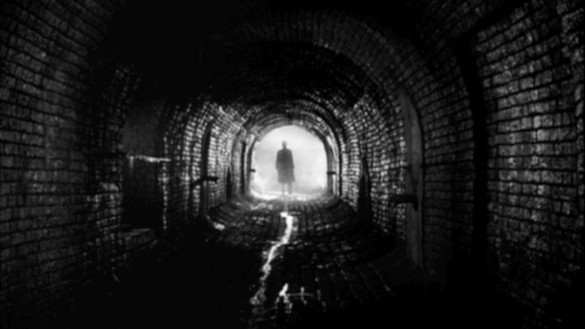
The full video podcast can be found HERE
Authors Statements:
My project is a video podcast explaining some of the real-world events represented in film noir. Firstly we looked at how the great depression influenced the world of noir. The world of noir is one that seems far from our own, estranged if you will. Violence seems to be the norm and people turn to morally dissolved acts ever so quickly. One might ask themselves why is this?
I argue this is because of the great depression. During the great depression many people found themselves in positions where their economic status was being threatened, and to combat this many Americans turned to crime. I used The Roots of Violent Crime in America to make this point quoting Mr. Latzer as saying there was a rise in violent crime in America following the great depression. This point is illustrated by most noir movies, and countless examples could be used. I choose to look at the touch of evil, due to the sheer violence depicted in the scene that I chose. In the scene, the police captain played by orsen wells is seen beating up and strangling a man, something very violent. This illustrates my point on the American people want to see more violence depicted on the big screen when normally many of the violent scenes depicted in noir wouldn’t want to be viewed previously.
Furthermore, we also talked about the prohibition. My main point and connection between noir and prohibition is lawlessness. This can be seen in the many aspects but the one we will be focussing on is the characters. First is the corrupt cop. In noir, many of the public officials and police aren’t always on the “good” side. Corrupt noir cops are not uncommon, whether it is placing evidence or committing crimes, none of these things are above the noir policeman. To illustrate this we looked at the touch of evil once again. In our scene, we see the police captain again played by orsen wells talking to our main character. In this conversation, they speak about Wells bending the law to his will. I argue that in the same way, public officials and cops behaved in this way during the prohibition. Cops might overlook drinking and other corrupt things just like the corrupt actions of wells. Furthermore, another character that was brought to us by the prohibition is the gangster. Gangsters are seen often, but we don’t think about the events that brought them there. During the prohibition, many people found a lucrative business in running alcohol illegally. This practice of illegal alcohol is what led to the rise of the gangster in the 30’s and to illustrate this point we looked at a scene from The Big Cumbo. In this scene we see our antagonist Mr.Brown sitting down. He is portrayed to be very powerful and has lots of influence. I argue that the events of the prohibition allowed for a character like this to exist. With the illegal business of alcohol running being more common it provided an outlet for criminals to build large underground criminal empires.
Lastly, we looked at how the themes of WW2 were portrayed in noir, To do this it was a little more tricky than just looking at one scene from a movie. I provided blog posts as well as some other evidence of the American people feeling the that the dreadful themes of WW2 were portrayed in noir. These two examples are KCET talking about uneasy America and noir, and then Military.com talking about how veterans felt that they could relate to the themes of noir being alienation and frustration. To see these themes portrayed we will have to look at the plot of a noir movie, with that being Ace in the Hole. In the movie, a journalist leaves New York because of a scandal. He moves to New Mexico where finds the perfect story. A man was trapped in a cave and with our main character reporting on it the story becomes a hit. Further along in the movie, we find out our main character was prolonging the rescue mission for more publicity. The themes of failure and unfulfilled promises in the movie hold true when we look at the plot, and it’s easy to see how the pessimistic themes of WW2 were represented by them.
Overall the themes of noir don’t exist in a vacuum and have to have come from somewhere. When we look at real-world historical events leading up to the emergence of the noir genre we see that they were portrayed directly in the themes we see on the big screen in noir movies. Whether it was the normalization of violent crime during the great depression in America, the dissolution of lawlessness during the prohibition, or the pessimistic themes of WW2 it is undeniable that the real world is responsible for some of the themes we see in classic noir films of the 1950’s and 60’s.
Lastly, I’d like to comment on the medium of my project. While creating my video podcast I was able to familiarize myself with the medium of video a lot better. This is only my second time creating media in video format (previously for another class), and I found that my understanding of the software I was using had greatly increased. This allowed me to do more than I was previously able to, now adding fade in and outs with audio and video as well as many other things. Furthermore, I was able to structure my argument around my pieces of media better providing voice-overs when needed something I previously wasn’t able to do as easily.
Overall I enjoyed creating this piece of media and I feel proud of it. I was able to structure an argument and provide examples all while using the medium of my choosing, that being video to better convey my points and examples.
