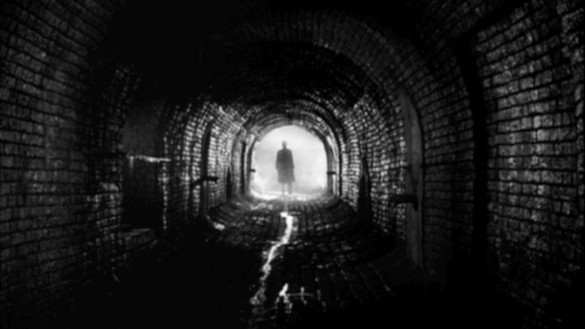
For this analysis of the 1944 Film Laura, we start at 1:06, just directly after the opening credits.
We open with darkness.
A male narrator tells the captive audience of the night Laura died. We get some underlying violin music thrown into the narration as the camera pans around a room filled with fancy glassware and statues. We can make the presumption that this is where Laura either spent most her time, lived, or was the place where her finals moments took place. The camera pans until it reaches a point where we see a man, at the same time the narration follows and tells us of a detective coming to see our narrator. The camera then, instead of panning aimlessly in one direction through the room, now follows this detective as he looks around this space. He stops in front of a wall with a bunch of face masks (not covid lol). These face masks look abstract, strange, and in a way threatening. As the detective takes a closer look, we hear the clock ring, grabbing his attention. He walks over to where the ringing is heard as the camera follows. He then begins to open up one of the cabinets with the fancy glassware and picks up one of the glass objects when our narrator becomes a diegetic voice as he questions what this detective is doing.
Laura’s apartment seems luxurious, we can presume she came from a wealthier background or gained this wealth through other means. Might this be hinting of possible corruption in Laura’s life? We learn in the Telotte reading about narration: “Uncontrolled passions, corruption, murder, and plottings of every sort are woven into its fabric, suggesting threatening eruptions in the normal, or what we might term the larger cultural narrative” (26). What I take away from this is that these are common things we might find in films noirs. For example, the implied corruption just based on the look of the apartment. We as audience members are given these facts: Laura’s dead. She was wealthy based on how she lived. A detective is sticking his nose into her living space. Our narrator is already in this living space. The facts hint to a foreboding sense of storytelling to be unraveled.
What we can derive from Christopher’s Into the Labyrinth reading selection, we find him discussing of many different contributors to the urban landscape of the films noirs as a whole, with one of them being Edward Hopper. This very Hopper, inspired the broad cityscapes of films like Night and the City and… our film Laura here. (15-16) This cityscape landscape is built to create a threatening and confusing, dark and drab labyrinth of buildings, leaving audiences and the characters in this environment to feel smaller than life.
What we’ve grasped from this seemingly short opening scene is that we’re going to be dealing with the aftermath of Laura’s death. Despite her being dead, she’s going to be the very focal point of the film. If we were to take examples from other films noirs, we might see flashbacks or dream sequences of Laura to tie in with plot details of the overall story. She’s more than likely corrupt or dealing with corrupt people. We’re definitely seeing more of Laura. She just won’t be a name. Maybe it’ll be a tale of love. What we know for sure is that it’ll end in tragedy as Laura is dead. No matter how much we might root for her or root against her, the fact is, her fate is sealed.

