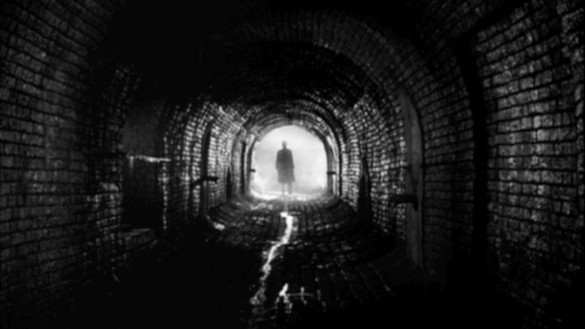
The final scene of “The Lady from Shanghai” is a masterful display of visual disorientation, utilizing lighting, sound, shot composition, and editing to create an unstable environment in which the characters find themselves. Janey Place and Lowell Peterson’s work on visual motifs in film noir can help in explaining how the use of mirrors in the scene contributes to this sense of disorientation and confusion. “The dark mirror of film noir creates a visually unstable environment in which no character has a firm moral base from which they can confidently operate” (69). The Hall of mirrors in “The Lady from Shanghai” highlights this idea, as Elsa and Bannister’s distorted reflections suggest that they cannot escape the consequences of their actions. The lighting in the scene is also significant, with low-key lighting used to create deep shadows and a sense of danger, this is a common visual motif in film noir, as Place and Peterson mention how it contributes to the film’s mood of paranoia and unease.
The sound in the scene also plays a crucial role in creating a disorienting effect. The use of overlapping gunshots, mirror shattering, and the echoing of footsteps in the funhouse room contributes to the sense of confusion and uncertainty. We see this happen from (1:23:00-1:24:45) Starting with the slow dialogue from Bannister and Elsa, followed by the gun fight.
The shot composition and editing further enhance this effect, with Welles using multiple angles and perspectives to create a sense of disorientation. The rapid cuts between shots and the use of close-ups and extreme angles make it difficult for the viewer to get a clear sense of the space and the character’s positions.
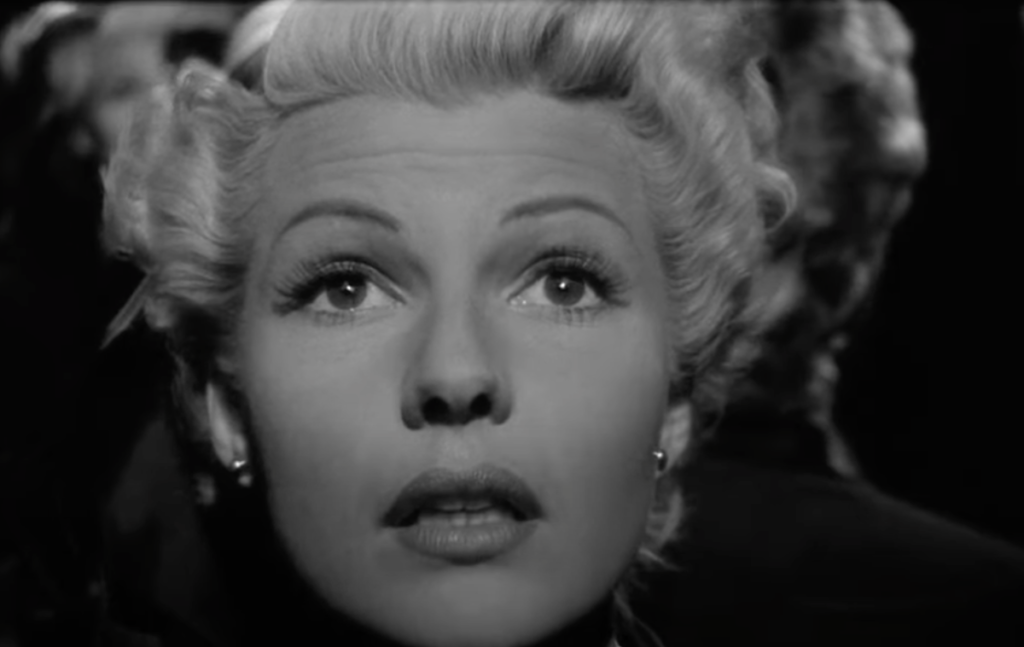
In this shot (1:22:55), we see the use of a more higher-key lighting, enough to convey the “normalcy…and interior feelings” (70) of the subject. The key light is not too bright in this shot, however there are no shadows on her face, suggesting a fill light was used to lessen the shadows casted on her face to create an even lit, close up shot, while providing high contrast between her face and the dark background behind her. Isolating her facial expressions.
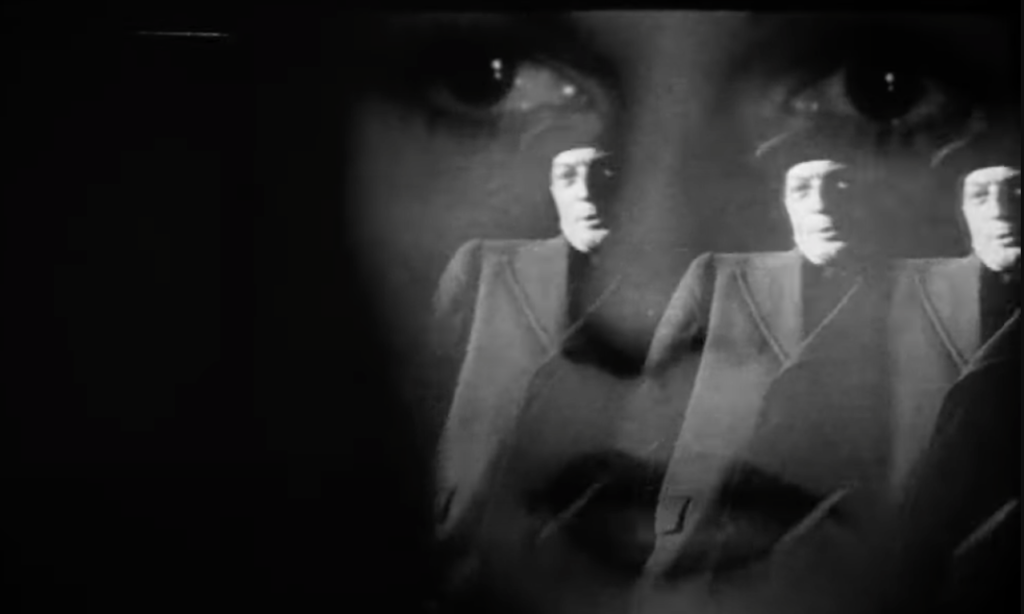
In this shot (1:23:35), we see another close up of Elsa’s face, illuminated by what appears to be a softer light, this shot is layered underneath an edited clip of Bannister, showing him and his movements duplicated three times, implying the disorientation of the room of mirrors. This shot suggests Elsa’s focus on Bannister, the still shot of her face merged with the disorienting movements of Bannister also imply she is watching him as he moves. Trying to focus on the real Bannister.
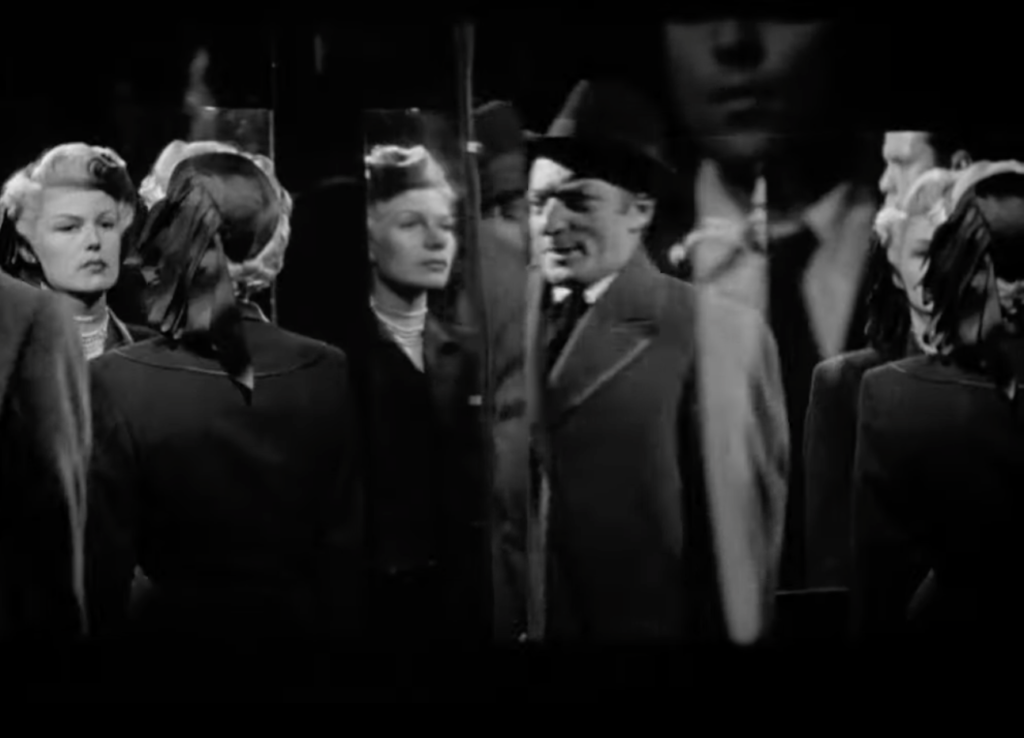
In this shot (1:23:40) We see a dual mirror shot, This shot is visually stimulating, as well as disorienting, because we see about 3 views of Elsa’s front side, and 2 views of her back side, along with two shots of Bannister, It seems as if this shot was duplicated and placed on top of itself, creating two layers, to which then they were off set from each-other, but still timed to where the movements match up. In addition to this, a faint, cut off, medium range shot of Michael appears in the right-third of the frame, suggesting his low-key presence in the encounter. While visually stimulating and disorienting due to the duplicate mirror effect, I believe this is a well balanced composition that follows the rule of thirds, and establishes to the viewer that this room is confusing for all characters.
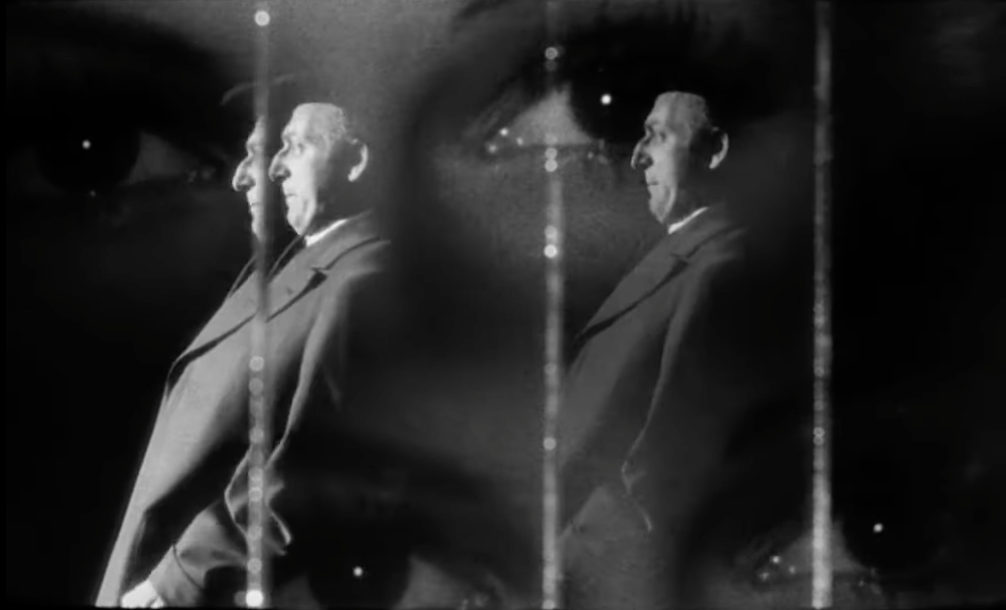
In this shot (1:23:41) We see two, two shot duplicates. The first one is of Elsa’s eyes, layered on top of each-other yet slightly offset . This is then layered underneath a two shot duplicate of Bannister, who is walking and talking. In this shot, we see Elsa’s 4 eyes remain focused and locked in on Bannister. The duplicate effects add to the disorienting atmosphere. The lighting from the original clips provide for a interesting composition in where Elsas features are for the most part dim, except for the whites of her eyes, where as Bannister’s side of his face is high-key lit. Showing his emotion and character clearly. A well composed image involving editing skill that I didn’t think filmmakers had in the 40s.
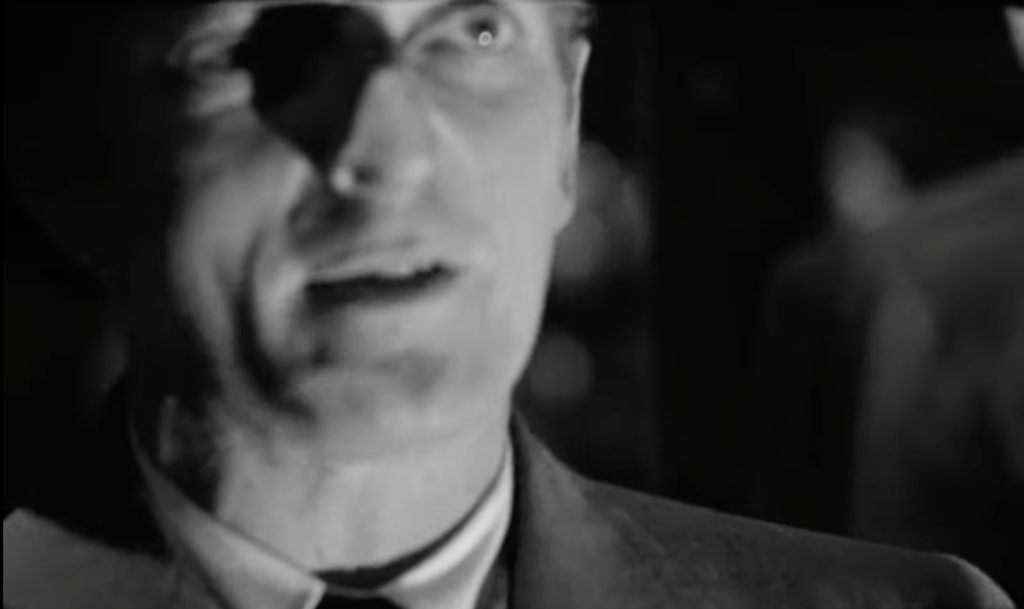
In this shot (1:23:55) We see a rough, out of focus, wider angle close up of Bannister’s face. According to Peterson when discussing a similar shot in noir, states that in a shot like this, the cross light from the right, casts a shadow onto the left side of the subjects face, producing an usual, grotesque shadow, in which is, “carrying connotations of the sinister and evil.” (72) It is a visually disturbing composition of Bannister, it seems to add in feelings of danger and eeriness to the film scene.
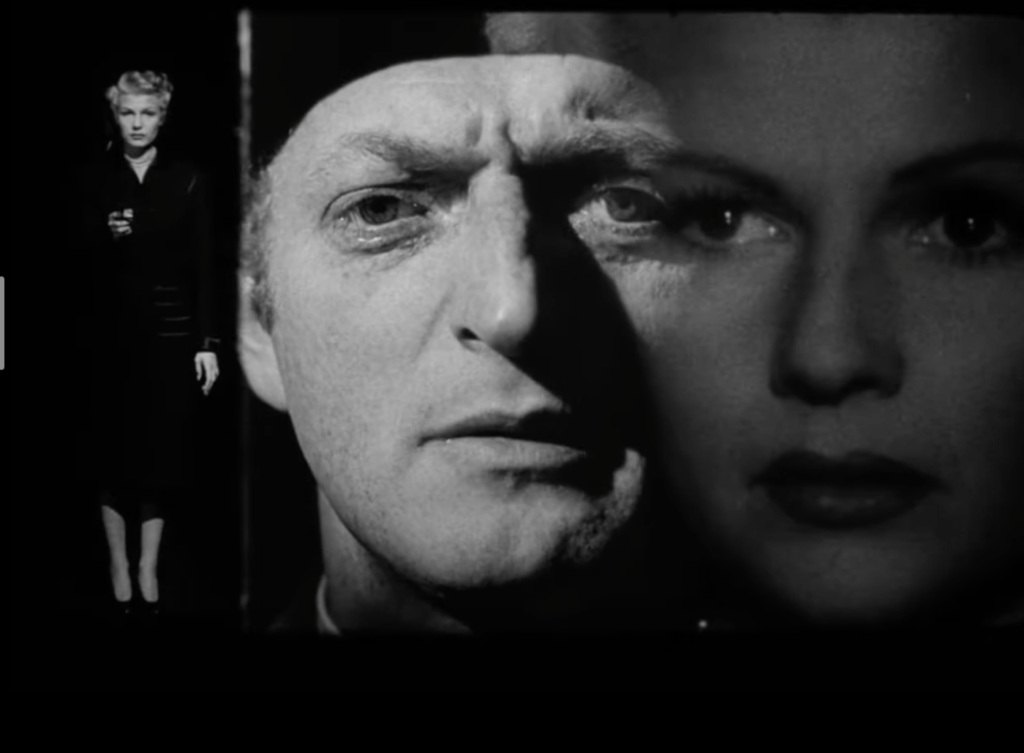
Finally, in this shot (1:24:19), we see three shots in one. Two close ups. Bannister’s close up utilizes harsh high-key lighting, with a dark shadow contrast on the right side of his face, suggesting his sinister nature. His acting and sudden stillness also implies he may have found the real Elsa. The Next close up is of Elsa, to the right of Bannister’s face. We see a use of a lower-key lighting, and a dead stare, suggesting that Elsa has been like this the whole time, not taking her eyes off Bannister. Elsa’s state of mind has not changed, as the audience has seen this close up of her before. Her close up is complimented by the medium to long range shot to where she is keeping the same expression as her close up, but now we see she is holding a gun, clearly pointed at Bannister, ready to be fired.
“Framed portraits and mirror reflections, beyond their symbolic representations of fragmented ego or idealized image, sometimes assume ominous and foreboding qualities solely because they are so compositionally prominent.” (68). In the film, the hall of mirrors is a prominent and ominous visual element, with the distorted reflections and multiple angles contributing to the sense of instability and danger. The use of mirrors in the scene is also significant because it reflects the theme of identity and self-deception that runs throughout the film. The characters are unable to see themselves clearly, both literally and figuratively, and this contributes to their downfall.
Another statement from Peterson states that, “It is common for a character to form constant balanced two-shots of himself and his own mirror reflection or shadow. Such compositions, though superficially balanced, begin to lose their stability in the course of the film as the symbolic doppelgänger either is shown to lack its apparent substantiality or else proves to be a dominant and destructive alter ego.” (68). The use of mirrors in this scene highlights the idea of the doppelgänger, with Elsa and Bannister’s distorted reflections suggesting that they have lost touch with their true selves. The use of multiple angles and perspectives also contributes to the sense of instability, as the characters are shown from different angles and in different contexts, creating a sense of uncertainty about their true motivations and intentions.
The final scene from “The Lady from Shanghai” is a visually disorienting and complex display of lighting, sound, shot composition, and editing. the use of mirrors reflect themes of identity and self-deception that is central to film noir, and it contributes to the overall mood of paranoia and unease. Janey Place and Lowell Peterson’s work on visual motifs in film noir can help explain how the use of mirrors in the scene contributes tot he film’s overall sense of disorientation and instability. It is a great production by Welles and his cinematic techniques show his ability to create a mood and atmosphere that is unsettling and unforgettable.
