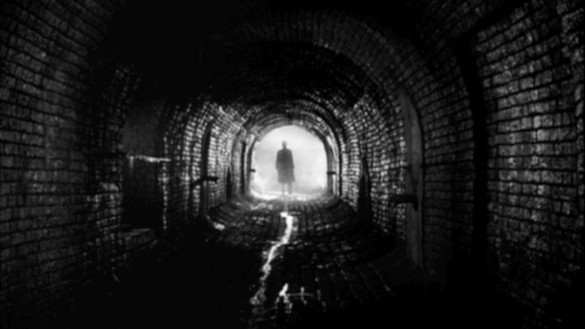
The combination of German expressionism, the gender roles of the time, stereotypes created by films, and expectations for women during the 40s-50s created the femme fatale. This character image, over time, has evolved to where there is now a definition and somewhat understanding of the femme fatale of film noir. This character is truly one of the greatest examples of female perseverance along with both societal conforming and breaking of the ‘norm.’
A plethora of characters spans across a timeline of the ages to prove true the prior statements. From The Maltese Falcon (1941) to The Last of Us (2023), a focal figure is the feminine presence – the main character, really. So many personalities that all contribute to the expansion, the explosion, of females in the media industry. Thinking of the tatted, trauma ridden, but genius Girl with the Dragon Tattoo to the powerful child figure Eleven in Stranger Things. Both are seemingly opposites – but what they have in common, and where they came from, is duly and worthy of notice, to be detailed later.
One of the biggest character tropes in film noir and all other sub genres of the already arguable genre is the femme fatale. I referenced that she is the main character because without her, the movies would be missing an integral part of what makes it whatever categorization it wrangles.
Love, lust, money, sex, power; all characteristics that enrapture our femme fatale. Because to understand how this character is seen more often than not, how she is an icon of divergence, the origins of her must first be understood.
In “Women As Seen in the Film Noir” by Andrew Dickos, which, can I just say, how can women be explained by how they are seen by a man? Why is there not a “Women As Seen in the Film Noir by Women” explanation – but anyways…a checklist is offered, descriptions that according to Dickos are “indisputable.”
- The creation of sexual tension
- Independent or rebellious will
- The ingenious and clever conservative wife/girlfriend
- The golden trio of motivations:
- Lust for exciting sex
- Desire for wealth and power it brings
- Need to control everything/everyone around her
- Opacity of her is a projection of “the male desire to retain her in the role of the mystery woman…”
- Must inevitably die – “or, at the very least, be mortally injured or be arrested for her crimes”
At the time that film noir became prominent, after World War II, women in the 40s “filled the roles of housewife, mother and homemaker, or they were single but always on the lookout for a good husband,” as Mel Bondfield puts it in “Gender Roles in 1940s Ads” from National Film and Sound Archive.
So, for these films to offer the opposite of an ideal woman in the time, enticement was at large – the thrill was almost devastating. Yet WWII also empowered women, because as the men were off at war, it was the women that stepped up to serve their country.
And how were they rewarded, through film? By a violent, condescending portrayal that almost deteriorates any opposition. The whole dynamic is befuddled based on perspective and the discourse of the age.
Was the femme fatale a “inspiration for female liberation,” or a ball and chain on how women, when perceived through the male gaze, must exist as?
Winter’s Bone (2010) stars a young Jennifer Lawrence who plays Ree Dolly, with the focus is to find her father in order to keep the house that her mentally lost mother and two very young siblings live in – she is going through a war herself in a sense, having to step up with the ‘man’ of the house gone.
It’s also interesting to note that Ree wants to join the army…her situation is fatale, she checks having an ‘independent’ and ‘rebellious’ will, and she is, of course, female, and a liability for several male characters. Does Ree represent this female liberation?
Reminds me of The Nightingale (2018). Much more explicit showing of violence. Female lead with male counterparts. One of the most disturbing depictions of being a woman in the time period of the 1800s.
This conversation may seem back and forth, a bit all over the place, perhaps, but that is entirely a point within itself – the portrayal of women is constantly pulled and strained to be understood despite the complexity of a female character, and so by so many viewings being put on screen, we further understand that “The arousal of the femme fatale in the film noir was a radical departure from the suffering or glorification of women traditionally seen in screen melodrama” as written by Dickos in “Comments on the Classic Film Noir and the Neo-Noir” (238).
Referencing Dickos again, he writes in “Comments on the Classic FIlm Noir and the Neo-Noir” that the “neo-noir is generally more violent, and more graphically violent at that, than the classic film noir ever was.”
So, we see femme fatales in regards to film today more graphically, more violently, and does this perhaps contribute to the rise of violence against women today? Especially with a pandemic in place – in fact, according to UN Women “Facts and figures: Ending violence against women,” it is stated that “the impact of the COVID-19 pandemic, which has increased risk factors for violence against women.”
Out of the Past (1947) follows Jeff and Kathie, with Kathie being a woman Jeff is going to the ends for, even with the end resulting in her causing his death. Scarlet Street (1945) shows a manipulated Kitty manipulating old artist Christopher Cross. Sunset Boulevard (1950) includes a mentally deranged, retired actress as she controls screenwriter Joe Gillis. What do these have in common?
More to include:
Topics/subjects:
- Femme fatales
- How have the depictions become typical for women today?
- How have femme fatales evolved?
Course readings:
- Christopher, Into the Labyrinth
- Porfirio, No Way Out
Films:
- Double Indemnity
- The Tragedy of MacBeth
- Pulp Fiction – both female characters
- The Lady from Shanghai
- Kiss Me Deadly
- Nocturnal Animals
Works Cited:
Bondfield, Mel. “Exploring Gender Roles in Vintage Advertising: NFSA.” Exploring Gender Roles in Vintage Advertising | National Film and Sound Archive of Australia, https://www.nfsa.gov.au/latest/exploring-gender-roles-vintage-advertising#:~:text=The%20men%20went%20into%20the,lookout%20for%20a%20good%20husband.
This one is useful to my argument because it talks about women in the specific time
period that film noir was also taking place, and so acts as historical validation of the
relevance of how women are depicted.
In the Film No1r – acnoir20.Acsites.org. http://acnoir20.acsites.org/wp-content/uploads/sites/19/2023/02/Dickos-Women-in-Noir.pdf
Dickos will be useful to my argument because this entire PDF is dedicated to discussion,
observation, and explanation of women in film noir.
“How World War II Empowered Women.” History.com, A&E Television Networks, https://www.history.com/news/how-world-war-ii-empowered-women.
Film noir originated from German Expressionism and was Post WWII. So, it is important
to include recognition of the major event that shaped tones of the genre (a term argued).
This article contributes to the point of female empowerment.
Comments on the A Classic Film No1r and the NE0-no1r – acnoir20.Acsites.org. http://acnoir20.acsites.org/wp-content/uploads/sites/19/2023/02/Dickos-NeoNoir.pdf.
By talking about the evolution of the femme fatale, the evolution of film noir will also be
included. Understanding neo noir as a whole helps better understand the female
characters and the grappling of if a femme fatale or not. This helps with my argument by
including another type of movie to contribute to the argument.
“Facts and Figures: Ending Violence against Women.” UN Women – Headquarters, https://www.unwomen.org/en/what-we-do/ending-violence-against-women/facts-and-figures.
Statistics are vital for representational accuracy. This site helps prove the violence
against women and helps tie the concept of the overwhelming majority of violence
displayed against women in film.

A solid start. Speaking of female takes on the femme fatale, you might take a look at these two VEs and see what you think:
– https://www.youtube.com/watch?v=XjAKd-Lfmt0
– https://www.youtube.com/watch?v=WfivkjgGdmI