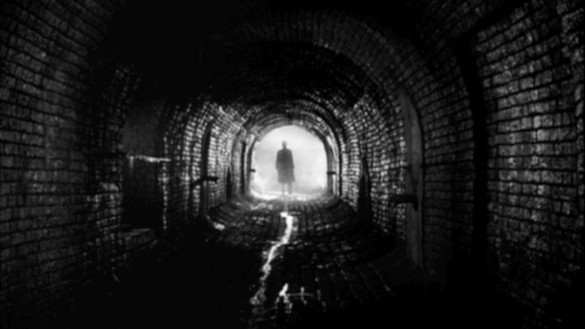
When you go to watch a film you enter into an agreement, almost a conversation if you will. As Telotte would put it ” We are supposed to be silent”. In many senses of the word we are giving up something, but this is all in order to gain what the film wants to tell us. Not only by being silent but by taking a deeper look at the choice of when words and narration are used we can gain a better understanding of the films we watch
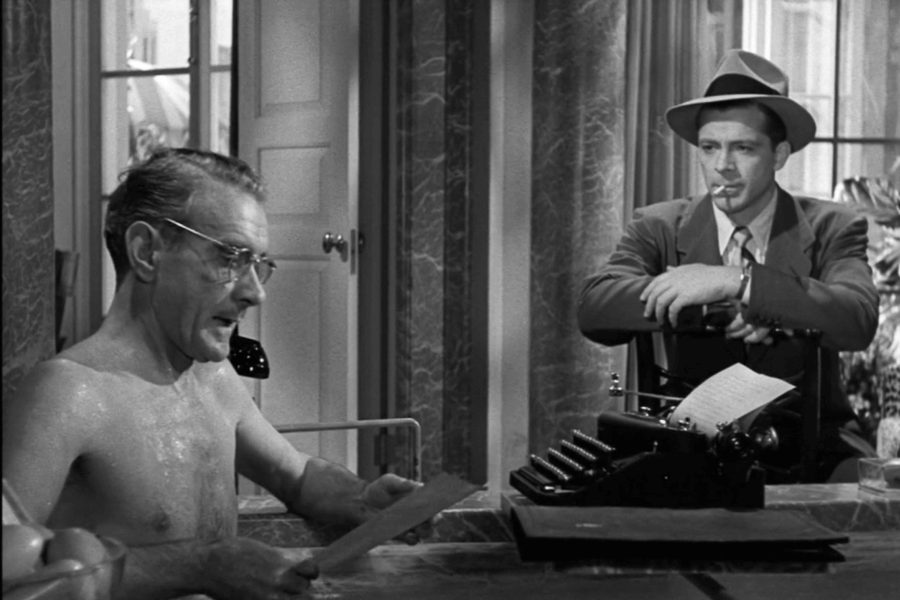
well, what can we gain from the first scene of Laura. The narration starts from the perspective of our soon-to-be murder suspect. The visuals scrolling across the screen give almost an angelic feeling with light airy music playing. The final statement in this narration sequence is us learning of laura’s murder, and then is stopped. For viewers in the 1950s these narration sequences “pushed at the very boundaries of classical narrative” as Telotte would say most noir films do. How exactly does it do this you ask? It places us inside the head of our suspect knowing his every thought as the detective searches around in his place of living, and this feels intimate and almost natural to start. It is not until we learn of the murder that his narration stops, and now not knowing what he is thinking seems troubling. Playing with our emotions the filmmakers used narration to make us feel safer and easily oriented in the film only to take it away from us. This helps to add to the themes and the motifs that are often associated with noir and mystery films.
In most cases not hearing a character’s thoughts would feel normal, but when you previously have and there’s a mystery at foot the audience cant help but feel out of the know, and this is exactly the goal of how the filmmakers wanted to use narration to aid in creating the themes of this noir mystery film.
