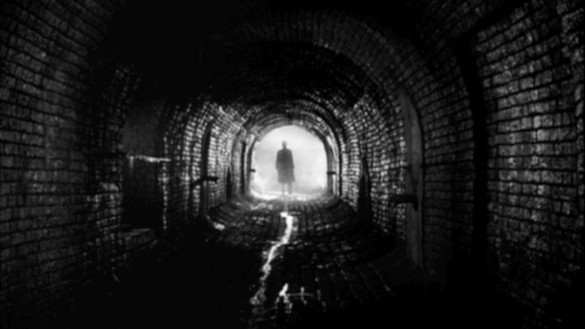
“The Big Combo” is a film noir from 1955 directed by Joseph H. Lewis. The movie revolves around a police detective named Leonard Diamond, who is investigating a notorious mob boss named Mr. Brown. Diamond becomes obsessed with bringing Brown to justice, but he finds that the mob boss is always one step ahead of him.
Leading up to the ending scene of the film, Diamond has spent the entirety of the runtime trying to bring down Mr. Brown. After Brown attempts to assassinate Fante and Mingo, who’re hiding from the police, with a bomb hidden inside a “money stash”, he is only somewhat successful as it only killed Fante, but leaving Mingo wounded and still alive. When Diamond arrives to the scene, he is able to get Mingo to confess that Brown was responsible for all the murders. Alicia, someone who’s been involved with Brown in the past, ends up revealing to Diamond that Brown took Susan, his suicidal girlfriend whom he domestically abuses, to a private airport in an attempt to escape with her.
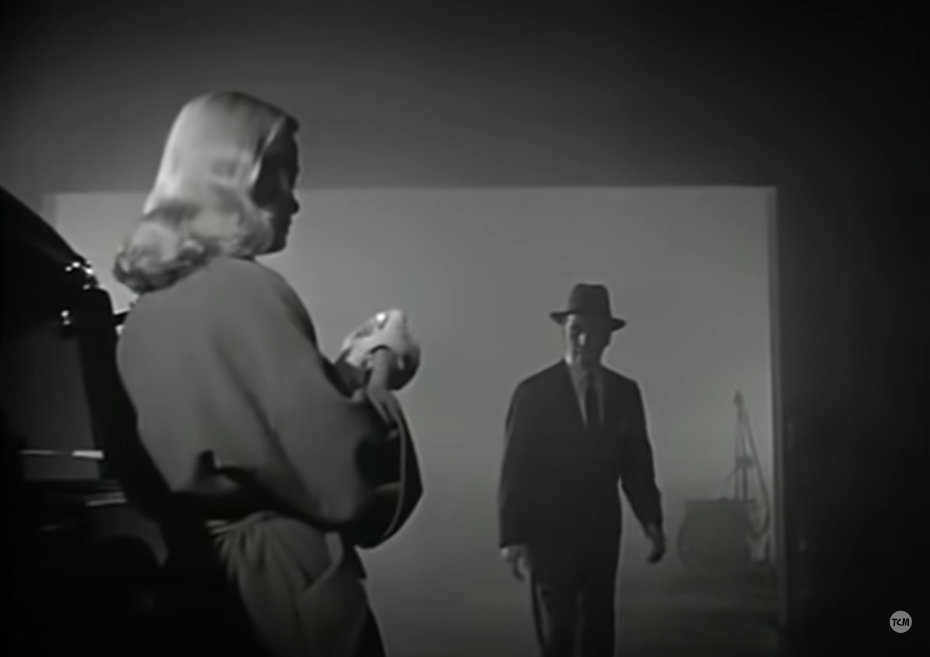
This scene starts at the 1:20:35 mark of the film. The atmosphere in this scene is dark and gloomy, fog surrounds the area. It’s like the viewer can sense something important is about to happen, partly due to the fact that the rest of the film prior to this scene is generally basic in terms of the atmosphere. The back light of this scene is interesting because it’s actually a beacon, a light that spins similar to ones you would find on top of a lighthouse, which I found to be quite clever. The back light is phasing in and out, which somewhat adds to the uneasiness and tension of the scene. As stated in Place & Peterson’s article, “the back light is a direct light shining on the actor from behind, which adds interesting highlights and which has the effect of giving him form by differentiating him from the background”.
As Brown is waiting for his plane to arrive, he is caught off guard by a car that arrives instead, the car being Diamond’s.
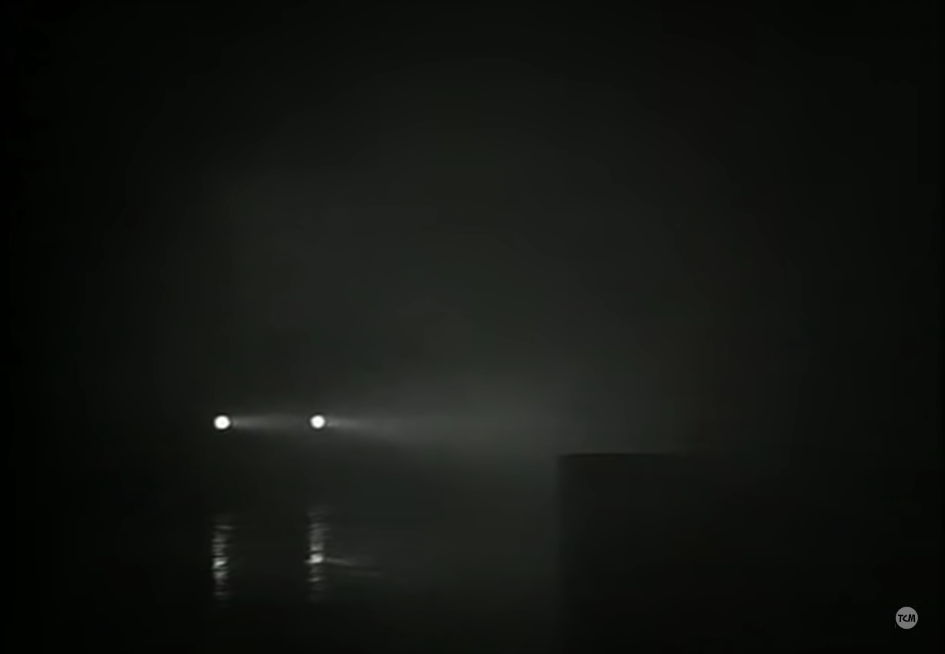
This shot in particular is great. While everything is shrouded in foggy darkness, the only thing the viewers see (also being Brown’s point of view) are the headlights of the car. This is a perfect example of another thing that Place and Peterson talk about in their article, “Above all, it is the constant opposition of of areas of light and dark that characterizes film noir cinematography. Small areas of light seem on the verge of being completely overwhelmed by the darkness that now threatens them from all sides”.
After the headlights turn off, Diamond steps out of the car and orders brown to surrender, which leads to a shootout.
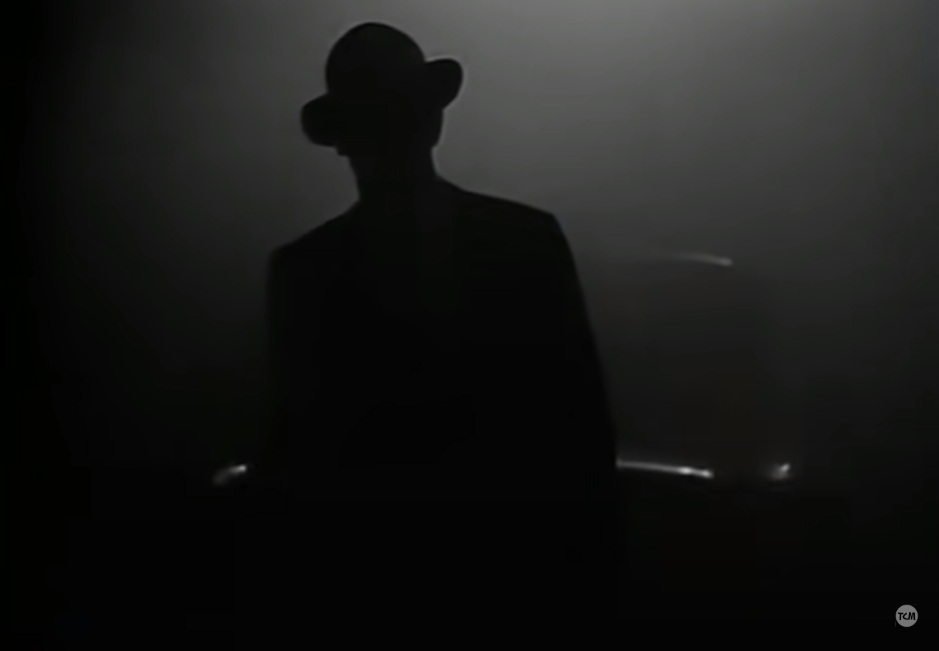
As Diamond approaches Brown, we are still in Brown’s point of view, and he can only barely see Diamond, only seeing his silhouette when the beacon shines in his direction. The way this sequence is directed is great, as it depicts Diamond being a force to be reckoned with, which makes sense as this is the one and only man to bring Brown to justice. He looks scary, and Brown should be scared.
Susan, which the audience can now assume is fed up with Brown, sabotages him by blinding him with his car’s mirror, hindering his ability even further to shoot Diamond. This leads to Brown running out of ammo, and Diamond arresting him.
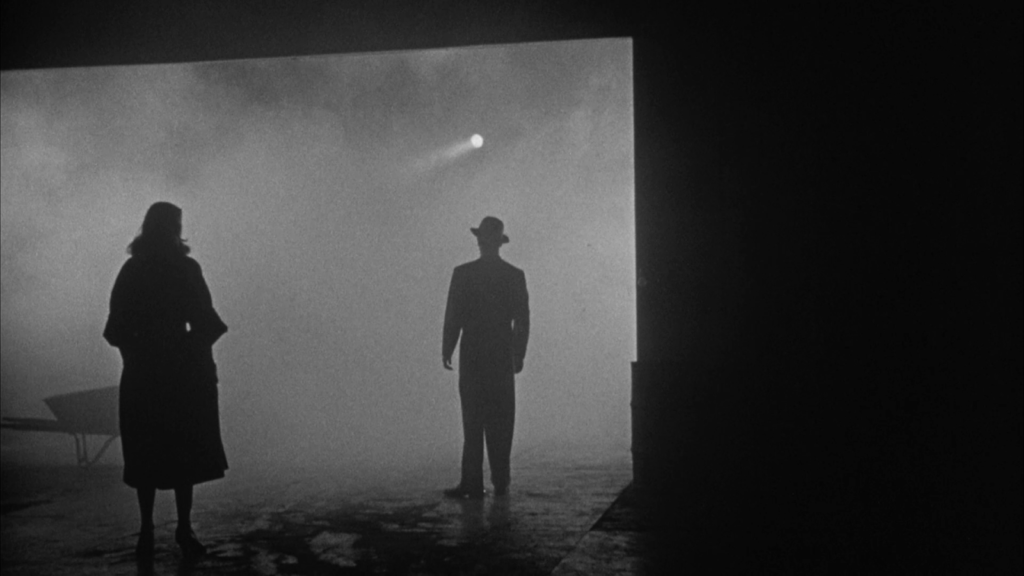
The ending shot of the film is beautifully shot, and it’s even directly referenced in Place and Peterson’s article, “silhouetted figures standing in rigid position become abstracted Modern Man and Woman in the final sequence of The Big Combo. The back-lighting of heavy smoke and an ominously circling light visible in the background further abstracts the environment into a modern nether world”.
Overall, the ending scene of The Big Combo is a perfect climatic conclusion to this story.
