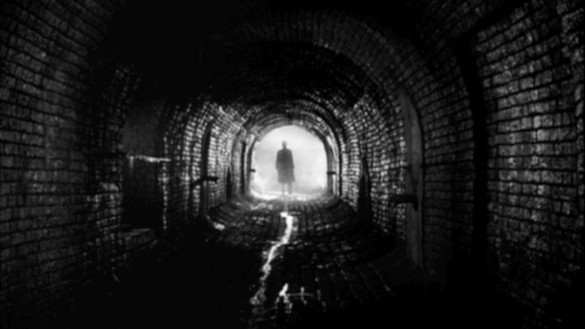
 | Through this video essay, we will dive deeper into the significance of the city as a symbol in film noir and how its features contribute to the overall atmosphere. |
 | We will also examine the role of lighting and shadows in creating a sense of moral ambiguity, isolation, and despair. |
  | Additionally, we will analyze how urban landscapes and architecture create a sense of disorientation for the characters and how it is reflected in the use of camera angles and shot compositions. |
 | Finally, we will discuss the influence of German expressionism on the visual style and themes of film noir, as well as how it has impacted the genre. |
     | Through films such as The Maltese Falcon, Double Indemnity, Blade Runner, Touch of Evil, and Scarlet Street, we will explore the techniques Noir filmmakers use to create a truly unique and captivating visual experience. |
   | Film noir emerged in the 1940s and 1950s as a genre that captured the gritty, dark, mood of post-war America. |
    | The genre drew inspiration from the urbanization and modernization of American society, as cities began to grow and transform in unprecedented ways. The city became a key symbol in Noir, representing the danger, and corruption of ideals. |
  | As a symbol, the city in noir emphasizes specific features that contribute to its overall atmosphere. Streets are dark, dirty, and like a maze, |
 | while buildings loom tall and shadowy. Urban spaces in Noir are often portrayed as isolating, claustrophobic, and overwhelming. These features create a sense of disorientation and unease, contributing to the overall mood of moral ambiguity and despair. |
   | Characters in Noir interact with the urban environment in complex ways, reflecting the moral ambiguity of their surroundings. In films like “The Maltese Falcon” and “Double Indemnity” Characters navigate the urban landscape with suspicion and paranoia, reflecting the pervasive sense of danger and corruption that defines the genre. Urban spaces are often used to create tension and suspense, as characters become lost in the city’s streets, or chased down shadowy alleyways. Include scene from: Maltese Falcon |
   | The role of urban landscapes and architecture in creating a sense of disorientation is reflected in the use of camera angles and shot compositions. Low-angle shots of towering buildings emphasize the sense of powerlessness and vulnerability that characters experience in the urban environment. Wide-angle shots of bustling city streets create a sense of chaos and confusion, further contributing to the mood of moral ambiguity and despair. ** a technique used in creating disorientation is known as the Dutch Angle, dutch angle shots are often used to portray a sense of unease or madness that the character is feeling. Oftentimes this technique results in a tilted horizon in the frame. (“setting up your shots” – Jeremy Vineyard) |
   | One of the most influential urban settings in Film Noir is Los Angeles. The city and its surrounding suburbs served as a backdrop for many classic film noirs, including “Double Indemnity” and “touch of Evil”. Los Angeles offered filmmakers a unique urban landscape to explore with its blend of suburban buildings, industrial zones, and glamorous Hollywood Neighborhoods. |
  | As film scholar, Robert G Porfirio notes in: “No way out: existential motifs in the film noir, The city in noir is not just a backdrop, but an integral part of the genres themes and aesthetics. By emphasizing the moral ambiguity, isolation, and existential despair of its characters and the world they inhabit, Noir”s urban setting becomes a powerful symbol of modern life’s complexity and uncertainty. |
    | In film noir, the use of light and shadow is a crucial component that emphasizes the moral ambiguity, isolation, and existential despair of its characters and the world they inhabit. The contrast between the bright city lights and the dark, uneasy backstreets creates a stark visual contrast that symbolizes the struggle between good and evil. |
    | Raymond Borde and Etienne Chaumeton, in their essay “Towards a Definition of Film Noir,” argue that the use of light and shadow is fundamental to the visual style of film noir. They note that the low-key lighting, with a predominance of dark areas, creates a sense of unease and mystery that is key to the genre. Filmmakers use shadows to hide things from the viewer, such as the faces of characters or the environment around them. In this way, the shadow becomes a symbol of the unknown, the hidden, and the dangerous. |
 | This can be seen in the opening scene of the film noir: Kiss Me deadly. The heavy dark streets illuminated by her running legs creates a sense of mystery and unease for the viewer. What is she running from? |
   | Janey Place and Lowell Peterson, in “Some Visual Motifs of Film Noir,” highlight the importance of light and shadow in conveying the psychological state of the characters. They note that the use of chiaroscuro lighting creates a sense of ambiguity and uncertainty that reflects the mental state of the characters. By playing with the contrast between light and shadow, filmmakers can convey the psychological turmoil of their characters. |
      | Filmmakers use lighting and shadows to create a sense of isolation and despair. High contrast lighting, with deep blacks and bright whites, is a hallmark of German Expressionism, which greatly influenced the visual style of film noir. This technique emphasizes the shadows and creates a sense of unease and disorientation, as the viewer is unsure of what lurks in the darkness. *Take a look at writer, Matt Millikan, on his published article over the influence of German Expressionism in horror and film noir. The article discusses the work of Fritz Lange. German Expressionism was known for its surreal atmospheres, chiarsocuro lighting, grotesque characters, and nightmare sets. The motion picture portrays a sense of realism, with a distorted lense, that illuminates the subconscious feelings, thoughts, and ideas. |
   | The use of light and shadow is fundamental to the visual style of film noir. By playing with the contrast between the bright city lights and the dark, uneasy backstreets, filmmakers can create a sense of moral ambiguity, isolation, and existential despair. This effect is achieved through the use of high contrast lighting, deep shadows, and the imposing urban environment. |
 | In conclusion, film noir utilizes the urban setting and contrast between light and shadows to convey the moral ambiguity, isolation, and existential despair of its characters and the world they inhabit. |
   | Throughout the mid-20th century, film noir emerged as a response to the urbanization and modernization of American society. Its visual style and thematic motifs, including the use of shadows, isolation and existential despair, urban decay, and camera angles, reflected the disorienting and bleak nature of the city in this era. |
 | The use of lighting and shadows is a crucial element in conveying the morally ambiguous nature of the characters and their world. |
  | The contrast between the lights and dark, creates an atmosphere of tension and uncertainty that permeates throughout the film. German Expressionism played a significant role in the development of this visual style, influencing lighting and the use of shadows to create a sense of foreboding and doom. |
   | The impact of film noir can still be seen in modern-day film, particularly in the neo-noir genre. Films such as Blade Runner, Joker, and The Dark Knight continue to use the visual and thematic motifs of film noir, but they also adapt them to the modern world. The city remains a symbol of corruption and decay, and the use of shadows and lighting continues to convey the moral ambiguity of the characters and their world. |
  | Film noir remains a significant influence on the film industry today, and its use of the urban setting and contrast between lighting and shadows continues to be a powerful tool for conveying complex and nuanced themes. Through its visual style and thematic motifs, film noir captures the mood and spirit of a particular moment in American history and continues to fascinate and intrigue audiences to this day. |

The audio seems to be missing….