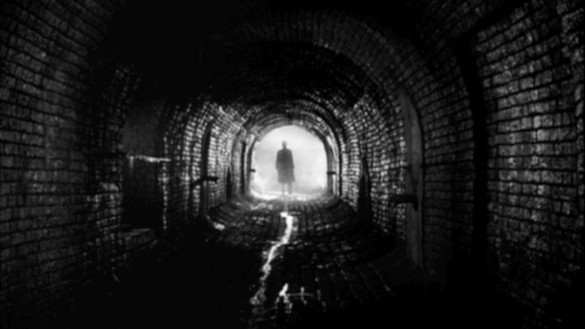
Scene from 0:00 to 2;30, Laura (1944) : Free Download, Borrow, and Streaming : Internet Archive
From the very first scene directly after the opening credits of “Laura” it felt like there was an understanding that Laura had passed. I think that in this particular film the narration adds a certain depth and understanding of the relationship between Laura and Waldo, even though it only lasts for the first minute of the film. Much like the prior noir films that we have seen, our narrator begins to list out details of “the weekend” of which she had passed away. And that has been the case in quite a few of these films, we get our narrator who is typically the main character giving the audience an overview of the issue within the film. Which in noir movies we are finding out typically is some crime or murder of some sort. In this specific example it feels like the imagery and diction that our narrator uses adds a dimension to the dramatization of this particular narration. “I felt as if I was the only human being left in New York” (1:21), “For with Laura’s horrible death… I was alone” (1:27) . In the piece from Telotte that we read earlier this week on page 13 the passage says this: “ first person narration and flashback enhance the aura of doom. It is almost as if the narrator takes a perverse pleasure in relating the events leading up to his current crisis.” This is a very interesting bit especially considering some of the quotes that came about from our narrator, Waldo Lydecker. This particular part of the reading does happen to be talking about tendencies of first-person narration, which is the narration style in this film, but Waldo is not the one who ended up dead. This sense of inevitable doom that Telotte speaks of seems to be exactly what we’re getting from our narrator throughout this opening scene; This sense that Laura’s death has sent Waldo’s world into shambles as he attempts to recollect that final weekend. That sense of doom feels like it is a large part of the extra dimension that I spoke of earlier in the response.
Another trait of noir narration that I feel like is represented in this film and adds depth is the subjective Point of view. In Telotte’s reading he states this: ” While a subjective camera narration seems a logical extension of this aesthetic, its full development could only come with specific technical advances made during the war years…gave cinematographers a new range of motion and an ability to shoot from what before would have been considered impossible positions.. ” There is a shot early on in the film where Waldo says, ” I can watch him through the half open door”, and there is a shot of the detective. I feel that with Waldo as the narrator in this situation, similar to what the passage states, we are subjected to what Waldo is seeing as he voices over the shot of the detective in his living area.
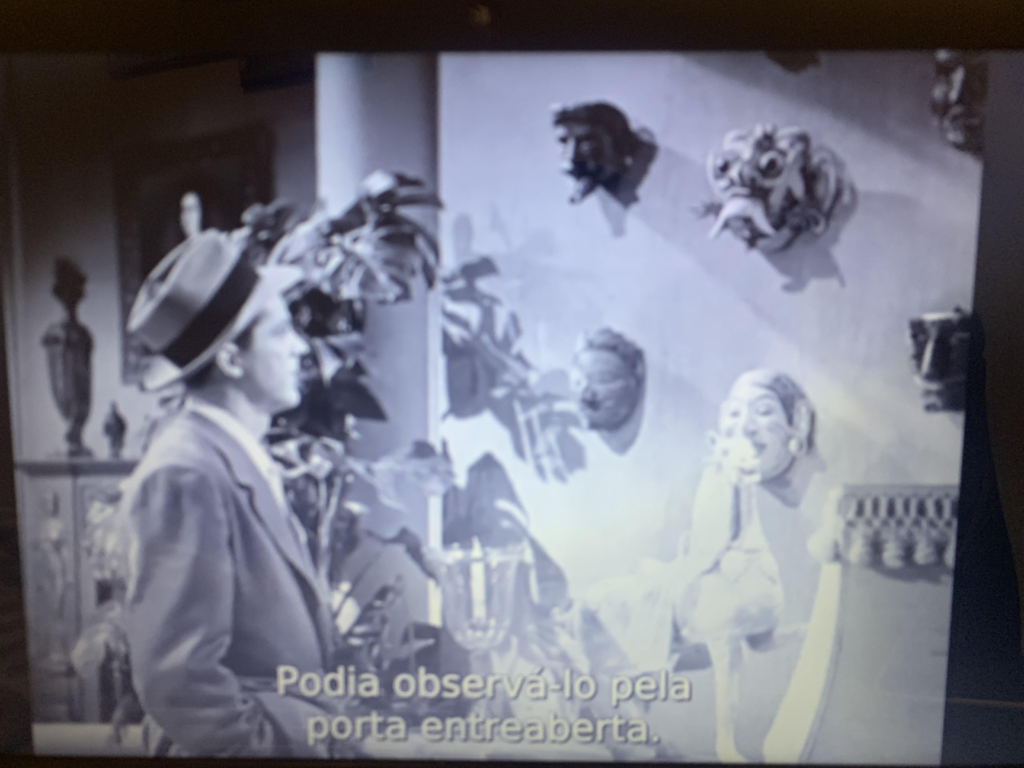
With this shot in the film the sense of a shared consciousness is very strongly felt, especially with our narrator talking over this shot, and it continues to add that extra dimension that makes these scenes feel somewhat real to the audience as we step into Waldo’s shoes for a short period of time.
One last aspect of narrative/ narration that Christopher mentioned throughout the passage had this to say:” When we look at the group of films we call film noir, we find both a notable instance of such violation and a revealing articulation of the sort of tensions that shape our film narratives” (page 2). I feel like that sense of violation goes hand in hand with the inevitable doom that Telotte speaks about later on in the reading. But we have often seen the “revealing articulation and violation” in past films that we’ve watched, especially the ones that have the narrator detailing events leading up until his/her own death. We don’t get the narration from the dead person in this particular scene, but we do get someone that seems to be very close with her, and I think that still fulfills the same purpose. And it certainly adds another point of view/ dimension to the film that I think is very notable and important.
Ultimately, I feel that the narration of this scene does a lot for us. from introducing us to Waldo and Laura’s relationship to giving us this ominous overtone that lets the audience know that death is more than likely coming. It adds that extra depth and understanding that we may not have gotten had the narration not been present. The narrative of the scene really opens up our due to the subjective narration of Waldo as we get him in a seemingly vulnerable state recounting his last encounter with Laura before her inevitable demise.
