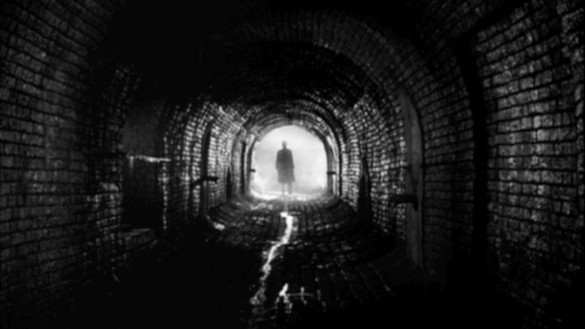
The phrase that art imitates life is commonly used, and widely accepted, but how would this apply to noir and as an extension neo-noir? It’s no doubt that the despair of the great depression in the 30’s and 40’s rolled over into the themes of classic nior. We see characters struggling to get by in everyday life “in a world where there are no transcendental values or moral absolutes” (Porfiro 81). This often results in our main characters committing morally grey acts to achieve the life they want, as seen in Double Indemnity (1944). Before the rise of the classic noir genre, the world was a very different place, with the law only seeming like a suggestion. Illegal bootlegging of alcohol was common and even public officials would visit speakeasies. Overall art does imitate life, and this is easy to see with the classic noir when we look at historical events leading up to the creation of genre. It’s easy to see how the hard economic state of the great depression lends itself to the dark and existential themes of the noir and why the American people had such Grimm themes on their minds. The Prohibition set the stage for the gangsters and mob bosses to gain control that we so often see in noir films. These two major historical events influenced the themes of noir all with the backdrop of urbanization and the “labyrinth” of the city as Christopher would put it.
While it may be easy to apply this historical logic to classic noir films, to understand it for the niche neo-noirs created today we have to take a deeper dive. In country noir we often see many of the major themes of classic noir, but why might this be when the historical context is completely different? When we take a closer look we will find that it’s no as different as we think. Country noir often takes place in rural settings with the city of classic noir starkly contrasting. Christopher states on page 4 ” Out of the Past is an oddity in that much of its narrative is constructed of nonurban
flashbacks” , and these flashbacks depict rural America with rose-tinted glasses, but how might this help us in defining the setting of country noir? In classic noir urbanization and the city has corrupted the characters and we see many mob bosses and gangsters as a result of this thus the city is depicted in a positive light. We see the same themes in country noir, but it isn’t the city corrupting the characters, but the rural setting. The lawlessness of rural American is often a common theme in country noirs. In Winters Bone the main character’s main motivation is money, trying to track down her father so their family can keep the house. This is all the fault of her father who was previously arrested. The sprawling city of the classic noir corrupts characters the same way the rural setting of country noir does. The corrupted characters in country noir aren’t gangsters, but normal people who have had their character lost to the natural landscape of rural America just trying to make ends meet. Now lets look at why this might be.
Rural America in contemporary times lends itself to the themes of noir somewhat easily. With many factory jobs and other employment opportunities leaving the country or being completely automated. The dynamic between the country and city is completely flipped on its head in rural noir. The city is often seen as full of opportunity, while the rural settings they inhabit our depicted as a husk of the past. More recent urbanization in America has led to this and created the perfect world that “emphasizes life’s meaninglessness and man’s alienation its catch~words include “nothingness,” “sickness” “illness,” “dread,” (Porfiro 81). All things which can be seen in classic noir as well as rural noir and all ways life is influencing the art we consume.
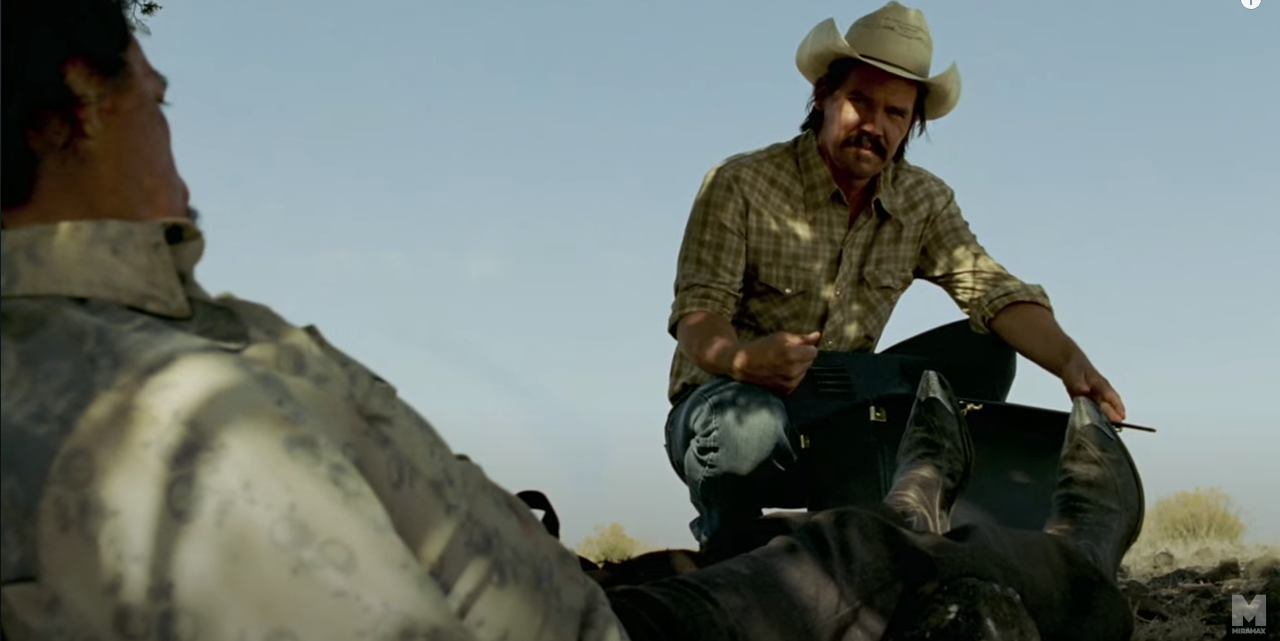
As a case study, we will look at No Country for Old Men. Our main character is seen above holding a bag of money he is soon to take. This was from a drug deal gone bad. Much like our main character in Doubly Indemnity, he is taking a large morally grey risk in pursuit of money. My argument is that this is a clear similarity to the morally grey choices of our protagonist in classic noir. In classic noir the morally grey choices sit in front of the backdrop of a lawless city, and in the same way this is seen in rural noir. The historical events leading up to those settings are different, however with urbanization creating the city that exists in classic noir, and it destroying the rural world in country noir. In both cases the nature that are characters inhabit are direct results of the time they were created in.
In rural noir urbanization and attempting to adapt to the more civil way of life pushes its characters to make morally grey choices in the lawless rural land that they know. While in the classic noir the same can be said about the city. Current events like inflation and other economic stressors lend creators to create more stories like this, with their main characters committing the morally grey acts so commonly associated with noir
Overall identifying the themes that carry over from classic noir into country noir is easy and straightforward at first, but it is not until we take a closer look at the real-life events surrounding both genres that we can have a better understanding of them as a whole. With classic noir being influenced by the prohibition and great depression, and rural noir by urbanization and current economic times.
Bibliography
Wilder, Billy, et al. Double Indemnity. Directed by Billy Wilder, N/A, 1944, N/A.
this was a film we watched in class and was available on YouTube due to its old age. This helped me have an example of a character’s morally grey actions in classic noir.
Granik, Debra. Winters Bone. Loinsgate, 2010.
This was a more recent example of country noir and helped me frame the need for money point of view as well as some more common themes in country noir. I had to buy this on Amazon to even watch it so I have a copy of it now.
Coen, Joel, et al. No Country for Old Men. Directed by Ethan Coen and Joel Coen, N/A, 2007, N/A.
Here I talked about some of the motivations of the main characters being because of his surroundings. (and those because of real-world events) I also had to buy this one on Amazon but wasn’t too upset because its a great movie.
Porfiro, Robert. Film Noir Reader . limelight , 1976, pp. 77–93.
this was a course reading that helped me talk about some of the themes shared in modern-day noirs and classic noirs. (note: the citation was difficult for course readings because I couldn’t exactly find where they came from in some cases)
Christopher, Nicholas. Somewhere in the Night. Free Press, 1997, pp. 1–32.
this is another course reading and its main point is the corruption of the city in classic noir, and was vital in me to make my point about corruption in rural areas due to urbanization and the loss of their way of life.

This a solid draft, and I appreciate the inclusion of a specific example to focus on. That said, you might consider expanding the discussion of NCFOM and tying each point back to your earlier argument a bit more clearly. 🙂