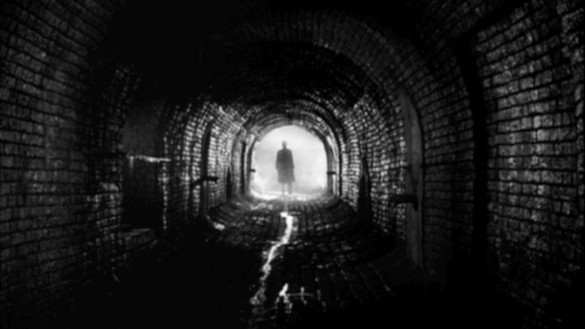
For the video essay I am going to focus on the femme fatale. More specifically femme fatale’s depiction in classical film noir and neo noir. To accomplish this, I plan to research how women were portrayed within society in the 1920s-1950s (they heyday of classical film noir) versus the 2000s (neo noir). I believe byContinue reading “Phase I: Proposal”
MEDA 325 Darker Than Night Posts
For this project, I want to focus on the influence film noir has had on one particular director: Christopher Nolan. Many of his films make use of… Read more “Video Essay Proposal”
My video essay will focus on how camera work helps to reinforce the themes of paranoia, despair, and hopelessness in film noir. I would look at how the camera work helps to convey the common themes of noir, focusing on angles, framing, movement, etc. Mainly i will focus on the unique camera work helps to […]
I will be doing my video essay over the role reversal in Film Noir based around the protagonist being a woman. Looking over the differences that the characters portray and the reversal of the male/female stereotypes within Noir. I would like to look at female protagonist specific Film Noirs and outline the differences between how … Continue reading Video Essay Proposal
The Killing (1956) is a noir film directed by the amazing Stanley Kubrick that shows many different examples of the key elements of visual motifs in film noir as described in the chapter from Place and Peterson. The most notable scene that shows these key elements comes between the 1:05 and the 1:10 mark of the … Continue reading Scene Analysis 3: The Killing
The Big Sleep is a classic noir film in 1946, which was based on the 1939 novel of the same name written by Raymond Chandler. Starring Humphrey Bogart and Lauren Bacall, respectively as Detective Philip Marlowe and Vivian Rutledge, this film tells the story about a “process in a criminal investigation, not its results” as […]
For my final scene analysis I have decided to talk about the common film noir trope of the Femme Fatale. In the Dickos reading Women as seen in film noir, Dickos states “Here, bad women, desperate women, determined women or women blind to the destructive passions that motivate them are, much like their male counterparts,Continue reading “Scene analysis 3”
1946’s The Stranger is an interesting film for me to analyze, as I learned after having watched the film that this was Orson Welles’ first foray into the genre of film noir as a director. Knowing this and seeing just how effective he was at capturing the essence of the film noir has made me … More The Stranger (1946) Scene Analysis
Directed by Orson Welles Claustrophobia! Paranoia! Despair! Nihilism! The defining characteristics of film noir. How does a filmmaker show these in their films you ask? Through style and formal elements of course! Formal elements of photography include visual motifs. Visual motifs include low-key & high-key light, unromantic close ups, off angle compositions, and depth ofContinue reading “The Stranger (1946)”
Orson Welles’ classic post-war noir film The Lady from Shanghai (1948) engages with a plethora of formal elements. This one-of-a-kind feature stands out for its remarkably stylized visual imagery. Throughout the film, Michael is established as a passive hero because unlike all of the other characters in the film, he doesn’t really desire anything besides adventure andContinue reading “Scene 3: Formal Elements / The Lady from Shanghai (1948)”